
By Dr. Hisham Badawi, Orthodontist (certified specialist), BDS, DDS, MOrth, PhD, FRCD(C). About Dr. Badawi
We track every aligner we plan and every aligner a patient actually uses. When we moved from an outsourced aligner system to aligners designed and made in our own clinic, the number of aligners patients needed fell by about two-thirds, in our own review of past cases (not yet peer-reviewed).
Our numbers at a glance
- 23 aligners instead of 67. In Dr. Badawi’s review of 263 completed aligner cases at Smile Elements, patients whose aligners were designed and made in our clinic used an average of 23 aligners, compared with 67 under the outsourced system we used before (one clinic’s own review of past cases, not yet peer-reviewed).
- 100% instead of 86%. In-house patients used a median of 100% of their planned aligners before their next scan, compared with 86% before.
- Same number of refinement rounds. Both groups had a median of 4 rounds of scanning and new aligners.
- What these numbers are. Our own results from a review of past cases (December 2025). They have not been through peer review, the two groups were not matched case by case, and using fewer aligners is not the same as moving teeth more accurately.
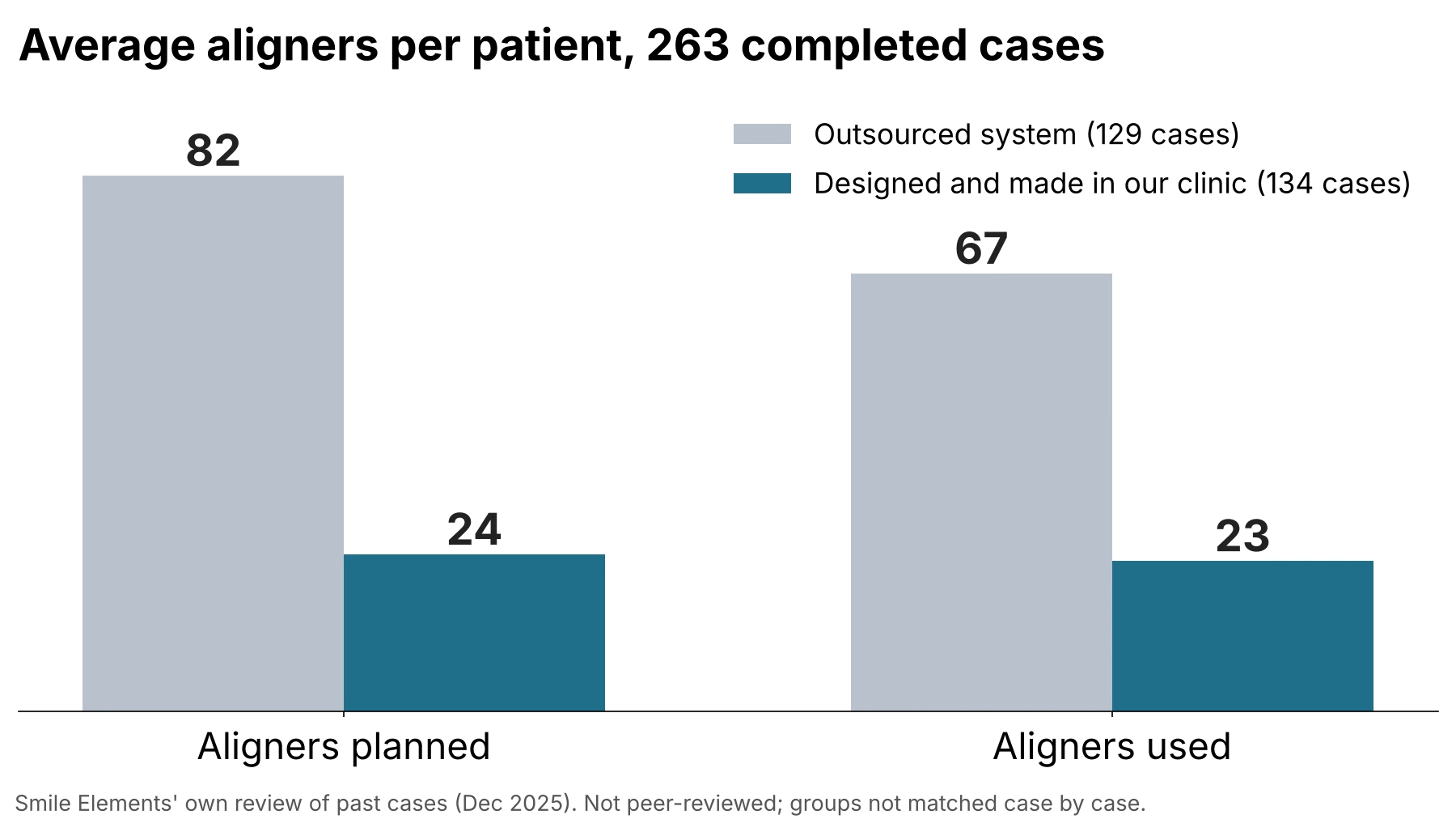
Source: Dr. Badawi’s internal reviews — white paper of 263 completed cases (Dec 7, 2025) and the Phase 1/Phase 2 audit in his 2026 paper. Averages per patient.
What we measured
Dr. Badawi reviewed 263 completed aligner cases from our clinic. 129 were treated with an outsourced system and 134 with aligners he designed and we made in-house. He planned every case in both groups himself, so the main difference was the system, not the orthodontist.
- Aligners planned and used. A plan that matches how teeth really move needs fewer steps, and fewer of those steps get wasted.
- Completion. This is the share of planned aligners a patient actually used before the next scan. In-house patients used a median of 100% of their planned aligners, compared with 86% before. Unused aligners mean the teeth fell behind the plan.
- Refinement rounds. Both groups had a median of 4 rounds of scanning and new aligners. So the in-house cases weren’t simply easier or shorter.
A separate review of children’s early treatment, and the comprehensive treatment that followed, showed the same pattern. In-house, patients used 90–95% of the aligners made for them; before, it was 68–69%. Before, that meant 12 to 19 unused aligners per patient ending up in a landfill. In-house, it is about one.
What this means for you
Fewer aligners means fewer appointments to collect them and less plastic thrown away. Most of all, it means a plan that teeth can actually follow.
What these numbers are, and aren’t
These are our own clinic’s results, from a review of past cases. They haven’t yet been through peer review, and we publish them here so you can see how we hold ourselves accountable. The two groups were not matched case by case, and using fewer aligners is not the same as moving teeth more accurately.
Common questions
How many aligners does treatment take at Smile Elements?
It depends on your teeth. In our review of 263 completed cases, patients whose aligners were designed and made in our clinic used an average of 23 aligners, compared with 67 with the outsourced system we used before. This is our own clinic’s data from past cases. It has not been peer-reviewed, and the two groups were not matched case by case.
Do patients at Smile Elements use all the aligners made for them?
In that review, in-house patients used a median of 100% of their planned aligners before their next scan, compared with 86% before. Aligners left unused usually mean the teeth fell behind the plan.
Does using fewer aligners mean a better result?
Not by itself. It means fewer planned steps went to waste, not that teeth moved more accurately. Ask your orthodontist how your own result will be checked at the end of treatment.
Who plans the aligners at Smile Elements?
Dr. Badawi, a certified specialist in orthodontics, plans every case himself, and the aligners are made in our clinic.
Related: Clear aligners for adults · Second opinion on your aligner treatment
